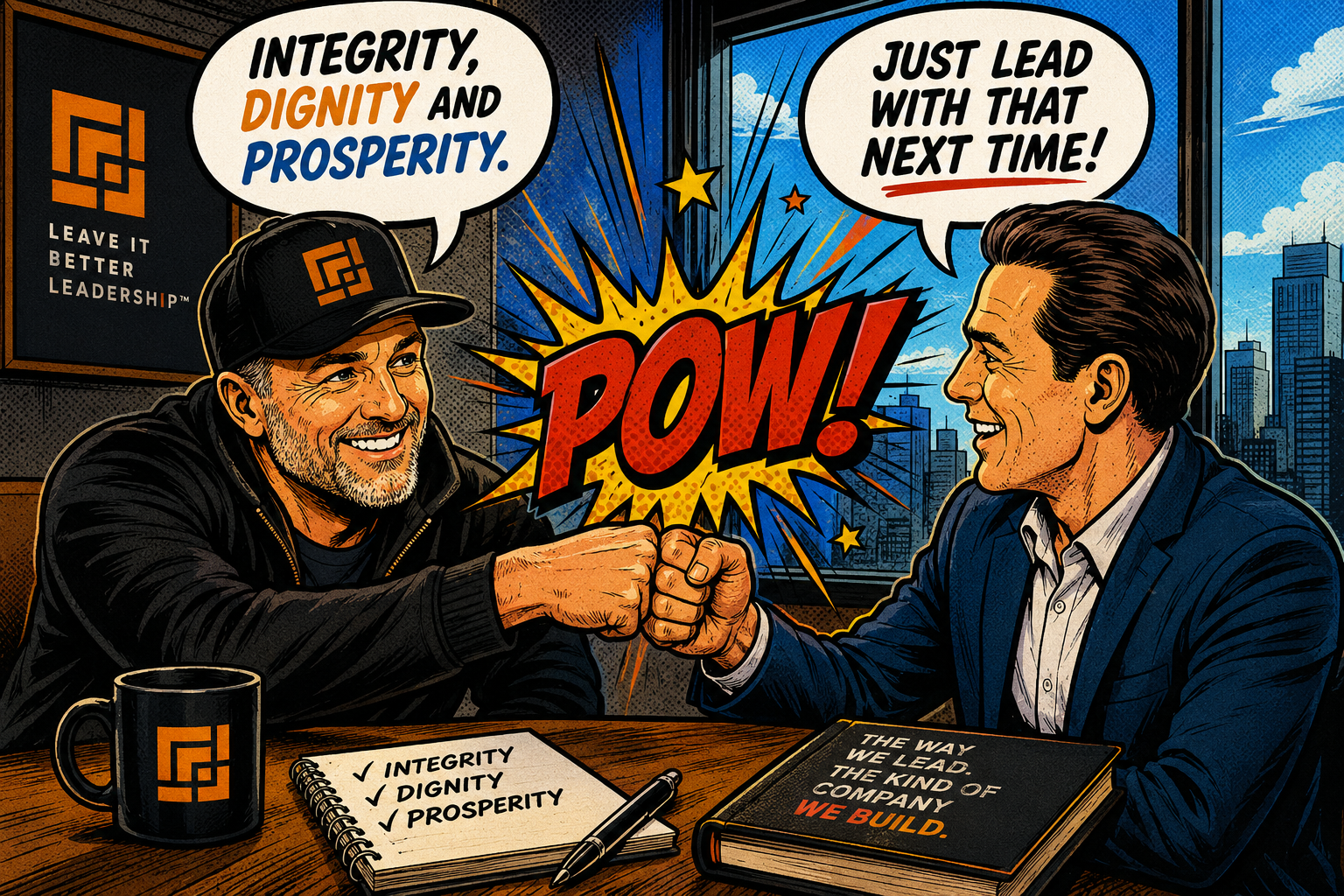
“James, just lead with that next time.”
A couple of years ago, I was meeting with an executive team about speaking at their first-ever all-employee summit. We had spent quite a bit of time talking about their company, their people, what they were trying to accomplish and what they wanted the day to be about.
Near the end of our conversation, I told them about something I had been developing called The IDP Way.
Integrity. Dignity. Prosperity.
I probably spent 60 seconds explaining what those three words meant to me and how I believed they belonged together. I told them I had been looking for evidence of that in them, and I hoped they could see evidence of IDP in me, too.
One of the executives looked at me and said,
“James, just lead with that next time 😉.”
I grabbed ahold of that because, in one sentence, I learned something important about them.
He wasn’t impressed because I’d come up with three good words or because I had created another leadership model.
He recognized something.
What I was describing sounded like the kind of company they were trying to build and the way they wanted to lead it.
That’s become increasingly important to me.
I don’t believe integrity and business performance are opposing ideas. I don’t believe caring deeply about people means lowering expectations. And I don’t believe prosperity is something a good leader needs to apologize for pursuing.
I believe healthy companies need all three — but knowing that isn’t enough. Leaders have to commit to making all three happen.
They need leaders who do what they say they’re going to do.
They need people to be treated with dignity, especially when conversations are difficult or performance isn’t where it needs to be.
And they need to produce results. They need to grow, make money, create opportunities and remain healthy enough to keep doing good work.
I’ve come to realize that the people I most enjoy working with tend to understand this already.
Maybe they don’t call it IDP.
They don’t need to.
But when we start talking, there’s usually a point where we recognize that we’re trying to accomplish some of the same things.
We care about doing things right. And we care about doing the right things.
That distinction has become a much bigger part of my own thinking over the past few years.
It’s also part of why James Mayhew Consulting eventually stopped feeling like the right name for my work.
There wasn’t anything particularly wrong with it. It had been my business for a long time.
But it didn’t say much about what I believed, the kind of work I wanted to do, or the people I wanted to do it with.
Leave It Better Leadership didn’t begin as a clever brand concept. It grew out of realizing what kind of work I wanted to do, and especially who I wanted to do it with.
And that brings me to something I’ve been thinking about lately…
When someone joins your company, how long does it take them to understand what really matters there?
I’m not talking about how quickly they learn your stated values.
I’m talking about what they discover from being around you.
- They watch which problems get your attention and which ones don’t.
- They hear how leaders talk about employees when those employees aren’t in the room.
- They see what happens when somebody makes a mistake.
- They notice whether a strong performer is allowed to get away with behavior everyone else knows isn’t acceptable.
They learn very quickly whether the things the company says matter actually matter when a decision becomes difficult.
That’s how people begin to understand what a company believes.
And whether you’ve intentionally taught them or not, they’re learning it from you.
So perhaps the question isn’t simply how long it takes someone to understand what matters inside your company…
It’s this:
Once they’ve been there long enough to know, what would they say matters most?
I’d be interested in your answer.
I hope you are, too.
James
Founder, Leave It Better Leadership™