Why Ownership Doesn’t Just Happen
If you lead a team you’ve probably either said this in a meeting… or heard it asked.
“Why don’t they just take ownership?”
“Why does everything still come back to us?”
“We talked about this. Why isn’t it done?”
“I don’t want to micromanage, but…”
Most leaders I work with want people who think for themselves, make good decisions, and don’t need someone standing over them all day. Almost none of them say, “I want a command-and-control culture.”
And yet that’s exactly what I see them building all too often.
Two ways leaders get this wrong
1. They control too much.
The boss approves everything, so people learn that the safest move is to ask permission, wait for direction, and avoid any mistake that might get criticized later. Over time, the organization leans on a few people who have become the answer for everything.
2. They provide too little.
This one is harder to see because it comes from good intentions. I see it most with high achievers and self-starters who rise into leadership. Much of their success came from seeing what needed to happen and making it happen. Then they start leading people and assume everyone works the same way.
So they hand someone a project, say “I trust you, just let me know if you need anything,” and walk away feeling good about it.
Six weeks later, the work isn’t where it should be, the person has been focused on the wrong things, and the leader is thinking, Why aren’t they taking ownership for this?
What it costs you
Whichever way you lean, the receipts look the same:
- Decisions get pushed back uphill
- Problems surface later, after they’ve gotten considerably more expensive
- A few people take on too much and become the bottleneck
- Good people either stall or leave
- The company can’t grow past what those few people can hold in their heads
Don’t miss this…
You cannot tightly hold onto control and grow at the same time.
Ownership isn’t a gift. It’s built.
Ownership doesn’t show up just because you gave someone freedom to run. It grows when people understand enough to assume the responsibility well. Every person on your team should be able to answer three questions:
- Do you clearly understand what’s expected of you, and why it matters?
- Do you know what you should be working on, and how it connects to the bigger picture?
- Do you know how you’re doing?
That’s Freedom & Responsibility, and it takes both sides to be truly effective.
Some companies create plenty of responsibility with very little freedom. Others give freedom without enough clarity, support, feedback, or accountability for anyone to use it well. Neither one produces the ownership you’re asking for.
You cannot ask people to take responsibility for outcomes while refusing to give them enough freedom to influence those outcomes.
Trust with validation
The healthiest version I’ve seen is built on trust with validation.
You don’t assume people will fail and hover over everything they do. But you also don’t disappear and hope it works out. You stay close enough to see progress, ask questions, coach, and clarify, so you can help someone adjust while there’s still time to change the outcome.
This is not soft leadership. It doesn’t lower the standard.
It gives people enough clarity, trust, and support to rise to it. And it asks something of you:
- Stop being the person everyone goes to for permission, answers, and what to do next
- Get comfortable with capable people doing it differently than you would
- Create enough safety for people to try, learn, and even fail in ways that aren’t catastrophic
- Hold people accountable
Try this before your next leadership meeting
Pick three people who report to you. Ask each one:
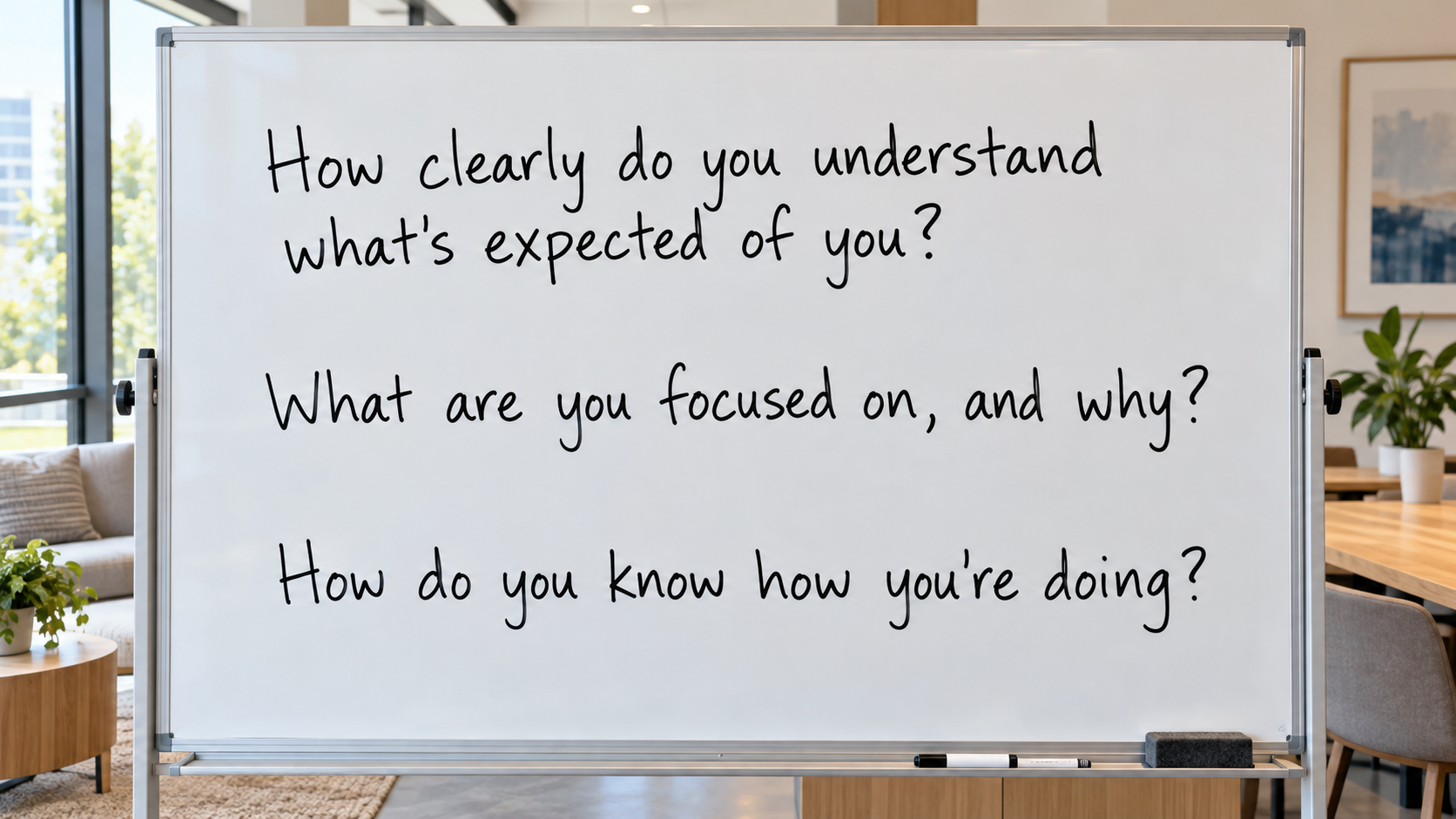
- How clearly do you understand what’s expected of you?
- What are you focused on, and why?
- How do you know how you’re doing?
Then compare their answers to what you would say.
The gaps are where your execution problem lives.
If the answers surprise you, that’s not a people problem. It’s a leadership problem, and that’s good news, because you can fix it.
The real question
The question isn’t whether you want Freedom & Responsibility or Command & Control.
Almost everyone picks the first one.
But, which one are people actually experiencing here?
Look at how often people ask for permission, how quickly problems surface, and how much still depends on a few people at the top. Your answer is already showing up there.
Are you leaving it better?
Every leader leaves at some point. A promotion, a new job, retirement, or just a long vacation. What’s left behind is either a team that can carry on or a team waiting for you to come back.
- Command and control leaves people who depend on you.
- Freedom without clarity leaves people who are guessing.
- Freedom & Responsibility leaves people who know what’s expected, know what matters, and know how they’re doing.
That’s leaving it better. So ask yourself:
- Have I left it better for my team? Are they clearer, more capable, and more confident than they were a year ago?
- Are we leaving it better for our customers? Do they get people who can make a good decision on the spot, or people who have to go ask?
- If I were gone for a month, would the work keep moving?
If the honest answer to any of those is “not yet,” that’s the work.
And it’s good work.
Get "The Whiteboard" by email.
If this was worth reading, I’ll send the next one directly to your inbox.
No daily noise. No content for the sake of content. Just something worth thinking about when I have something worth sending.
You can easily unsubscribe if you don't find value ;)